

- Courier service to home from 3,99 € from 2-3 tööpäeva
- Parcel machine from 2,39 € from 2-3 tööpäeva
- Pick up from the store from 18.11.2026
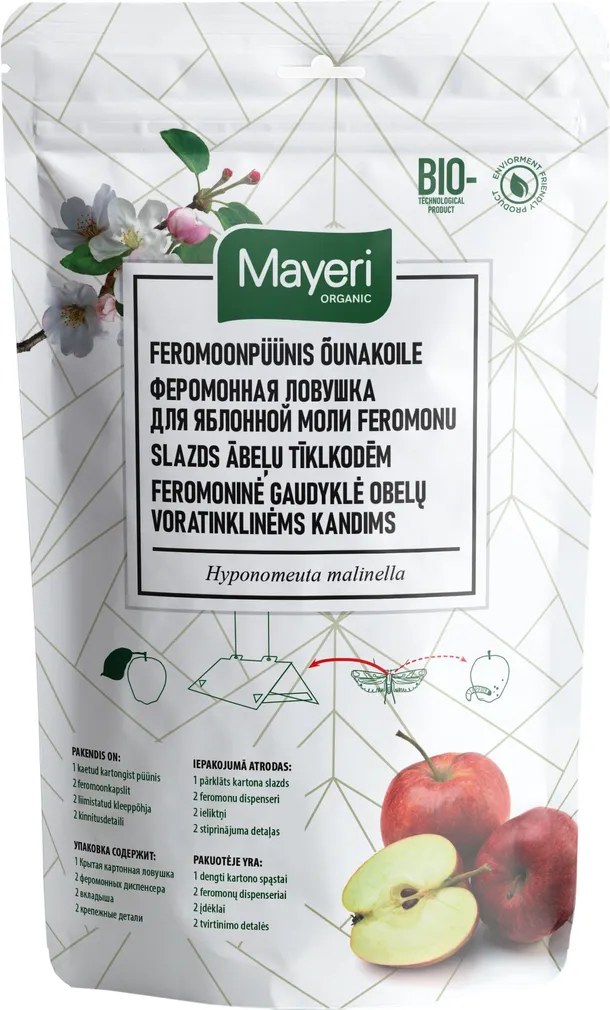
FEROMONE TRAP FOR APPLE MOTHS MAYERI ORGANIC
SKU: 468971
13.99 € /pcs
9.79 €
The special prices of the online store may differ from the prices of the regular store
Discount 4.20 € (30%)
E-shop campaign price for a logged-in customer
• Trapping codling moth butterflies with pheromone traps is ideal for home gardens where the use of insecticides is discouraged or kept to a minimum • One trap per apple tree • The pheromone trap is a small plastic house containing a non-drying adhesive base and a pheromone-impregnated capsule • The trap lures male moths into the house, where they get stuck to the adhesive base and die • 14-day return policy.
- Courier service to home from 3,99 € from 2-3 tööpäeva
- Parcel machine from 2,39 € from 2-3 tööpäeva
- Pick up from the store from 18.11.2026
Trapping codling moth larvae with pheromone traps is ideal for home gardens where the use of insecticides is discouraged or kept to a minimum. One trap per apple tree. Apple codling moth larvae bore narrow, winding tunnels inside the apple that extend all the way to the core. The fruit becomes unusable: the flesh turns woody and bitter, making it unfit for eating and unable to produce juice. By using 2–3 apple moth pheromone traps, you can detect the presence of this pest in your garden and estimate its population based on the number of insects caught in the traps to determine whether chemical control is necessary. By using a larger number of traps (one per mature tree), you can reduce the population of this pest in your garden by trapping the codling moth moths (using the so-called mass trapping method). A pheromone trap is a small plastic house containing a base coated with non-drying glue and a capsule impregnated with a pheromone—a special scent that lures male moths during their nuptial flight. The trap lures male moths into the house, where they become stuck to the adhesive base and die. In the event of a massive infestation, when the traps catch an average of 10 or more codling moths per trap per week, it is recommended to spray and continue monitoring the codling moth population afterward to determine whether a second spraying is necessary. If trap catches are below the control threshold, it is recommended not to spray! This helps protect the environment and saves you from unnecessary insecticide costs. NB! The glue used on the traps is very sticky and cannot be washed off with water. To clean your hands, you can use regular gasoline or white spirit; cooking oil or similar substances are less effective.
| General | |
|---|---|
| Brand | Mayeri |
| Product height, cm | 30.5 |
| Product width, cm | 21 |
| Product depth, cm | 1 |
| Product code | 468971 |
| Package dimensions | |
|---|---|
| Product weight, kg | 0.09 |
| Package height, cm | 30.5 |
| Package depth, cm | 1 |
| Package width, cm | 21 |
| Weight, kg | 0.09 |
Bauhof Transport
Courier service to home from 3,99 € from 2-3 tööpäeva
Delivery by courier. A Bauhof courier will deliver the goods to the doorstep at the destination. Carriage of the goods to the door or to the apartment is not included. Once the ordered products have been delivered to the courier company, the courier company will contact you in advance to specify the delivery time.
Check out more detailed terms here Parcel machine
Parcel machine from 2,39 € from 2-3 tööpäeva
Delivery to a parcel terminal. Parcels can be delivered to a parcel machine if they have a maximum size of 60x36x60 cm including packaging and weigh up to 35 kg. The delivery time is indicated on the product card. Once the products ordered have been delivered to the courier company, an SMS will be sent to the telephone number entered, containing information on the arrival of the parcel, the location and opening hours of the dispenser and a personal door code.
Check out more detailed terms here I'll follow myself
Pick up from the store from 18.11.2026
I'll come to the Bauhof store myself to order. Estimated time of delivery from the store is indicated on the product card. We will send you a notification when the goods arrive at the store.
Check out more detailed terms here