


- Courier service to home from 4,49 € from 2-3 tööpäeva
- Parcel machine from 2,39 € from 2-3 tööpäeva
- Pick up from the store from 18.11.2026
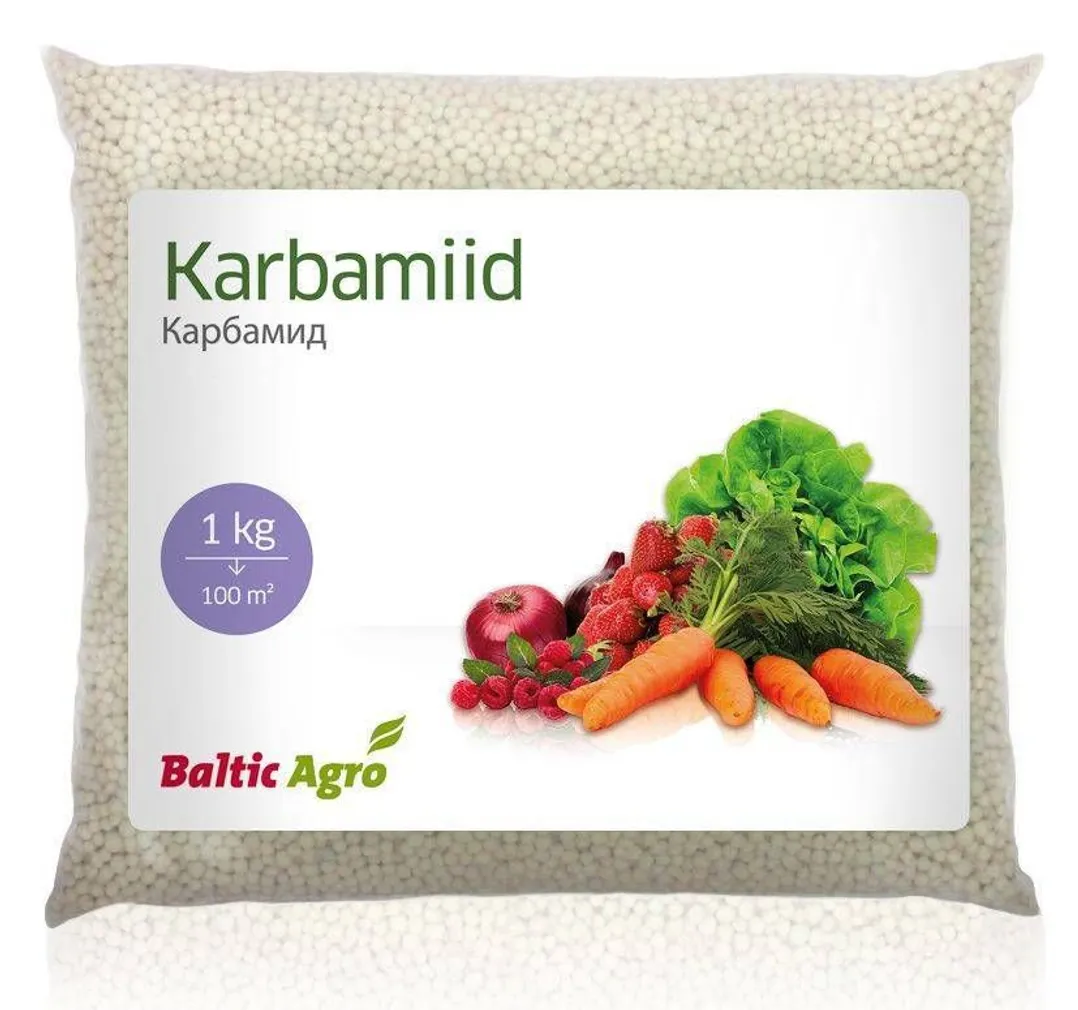
UREA BALTIC AGRO 1 KG
SKU: 536587
5.32 € /pcs
3.72 €
The special prices of the online store may differ from the prices of the regular store
Discount 1.60 € (30%)
E-shop campaign price for a logged-in customer
• Vees lahustuv lämmastikväetis aia- ja põllukultuuridele külvieelseks või kasvuaegseks väetamiseks
• Soovitav on kasutada üheaegselt fosfor- ja kaaliumväetistega, segades väetised vahetult enne mulda viimist
• Karbamiidi graanulid segatakse mulda või valmistatakse kastmis- või pritsimislahus
• 14-päevane tagastusõigus.
• Soovitav on kasutada üheaegselt fosfor- ja kaaliumväetistega, segades väetised vahetult enne mulda viimist
• Karbamiidi graanulid segatakse mulda või valmistatakse kastmis- või pritsimislahus
• 14-päevane tagastusõigus.
- Courier service to home from 4,49 € from 2-3 tööpäeva
- Parcel machine from 2,39 € from 2-3 tööpäeva
- Pick up from the store from 18.11.2026
Urea is a concentrated (N 46%), water-soluble nitrogen fertilizer for garden and field crops, intended for pre-sowing or in-season fertilization. Urea is well-suited for use as an irrigation or foliar spray solution. When using urea in granular form, it is recommended to apply it simultaneously with phosphorus and potassium fertilizers, mixing the fertilizers immediately before incorporating them into the soil. Urea granules are mixed into the soil or used to prepare a solution for irrigation or spraying. Fruit trees and shrubs are fertilized through the leaves until flowering (with a 1–2% solution, i.e., 1–2 kg per 100 L of water). For a watering solution, use 5–7 g per 10 L of water and apply it to one square meter.
Spraying destroys the eggs and larvae of pests (aphids, apple leafhoppers, scale insects, etc.) as well as the pathogens causing diseases (anthracnose, leaf spot, and powdery mildew on gooseberries).
To control apple scab, spray immediately before leaf fall in the fall with a solution of 500 g per 100 L of water, and in the spring before bud break with 500–800 g per 100 L of water; cherry trees should be sprayed against stone fruit rot in early spring before bud break with 300–500 g per 10 L of water; plum trees should be sprayed against rot in the fall after harvest with 400 g per 10 L of water.
APPLICATION RATES
Top dressing: 10–30 g/m²
Fruit trees: 25–30 g/m²
Strawberries, raspberries, onions, lettuce, cucumbers, carrots: 15–20 g/m²
Beets, potatoes, tomatoes: 10–15 g/m²
Gooseberries and currants: 20–30 g per bush
| General | |
|---|---|
| Brand | Baltic Agro |
| Product height, cm | 3.5 |
| Product width, cm | 17.5 |
| Product depth, cm | 17.5 |
| Product code | 536587 |
| Package dimensions | |
|---|---|
| Product weight, kg | 1 |
| Package height, cm | 3.5 |
| Package depth, cm | 17.5 |
| Package width, cm | 17.5 |
| Weight, kg | 1.02 |
Bauhof Transport
Courier service to home from 4,49 € from 2-3 tööpäeva
Delivery by courier. A Bauhof courier will deliver the goods to the doorstep at the destination. Carriage of the goods to the door or to the apartment is not included. Once the ordered products have been delivered to the courier company, the courier company will contact you in advance to specify the delivery time.
Check out more detailed terms here Parcel machine
Parcel machine from 2,39 € from 2-3 tööpäeva
Delivery to a parcel terminal. Parcels can be delivered to a parcel machine if they have a maximum size of 60x36x60 cm including packaging and weigh up to 35 kg. The delivery time is indicated on the product card. Once the products ordered have been delivered to the courier company, an SMS will be sent to the telephone number entered, containing information on the arrival of the parcel, the location and opening hours of the dispenser and a personal door code.
Check out more detailed terms here I'll follow myself
Pick up from the store from 18.11.2026
I'll come to the Bauhof store myself to order. Estimated time of delivery from the store is indicated on the product card. We will send you a notification when the goods arrive at the store.
Check out more detailed terms here