

- Delivery is not possible
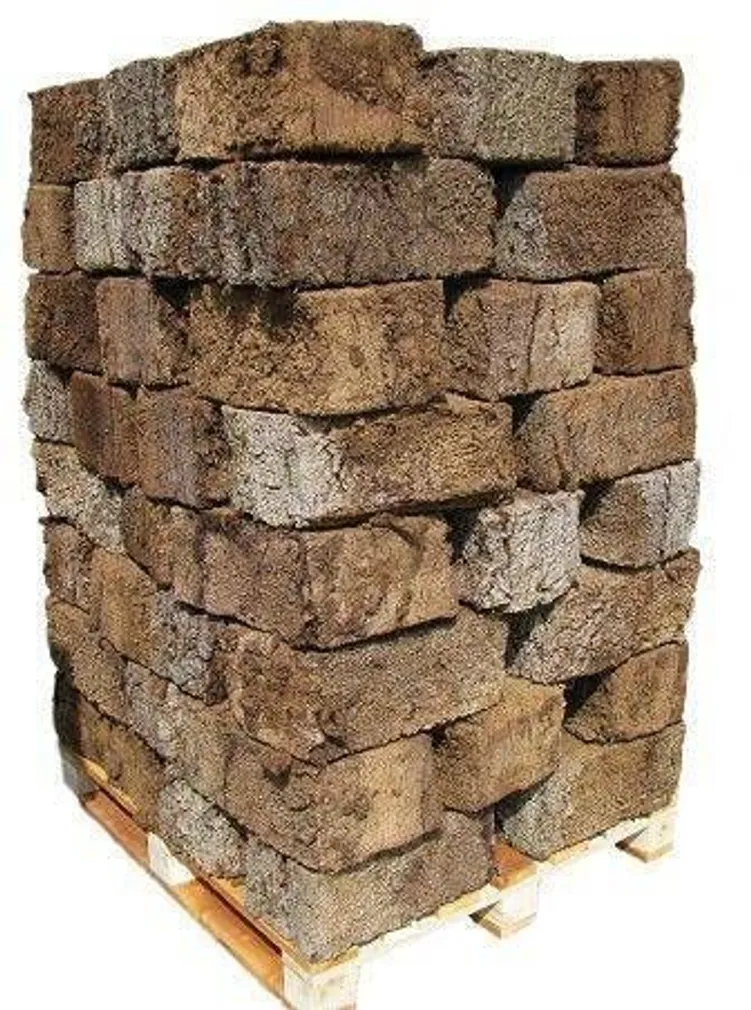
KEKKILÄ PEAT BLOCKS, 64 PIECES PER PACK
SKU: 602888
We apologize, but we inform you that the desired product is currently temporarily out of stock due to high demand. However, we offer excellent alternatives from the same product category , which can bring you just as much joy!
But your shopping pleasure doesn't have to end here - you can continue your research by returning to the homepage or use our powerful search function to discover even more great options. Happy shopping!
• Vastupidav looduslik materjal.
• Mitmeotstarbeline – aia rajamiseks ja taimede istutamiseks.
• Plokid on lõigatud tervelt välja soost kaevandatud pruunsamblast moodustunud turbast ning neid ei ole peale kuivatamise muul moel töödeldud.
Alusepakkumine! Komplektis 64 tk.
Tarneaeg alates 10.06.2024
- Delivery is not possible
Kekkilä peat blocks are a durable, natural material for building fences. As the name suggests, they are made of pure, dried peat. Peat blocks can be used to construct various structures and features for your yard. The blocks are cut whole from peat formed by brown moss mined from a bog and have not been processed in any way other than drying.
<
Introductory offer! Set includes 64 bags.
Have you been dreaming of a beautiful flower bed but don’t know how to bring your idea to life? A wall built from peat blocks—an easy weekend project—is a great solution for anyone who wants to create a clearly defined planting area without incurring major costs or hiring extra help. In natural gardens, peat blocks are an excellent building material because they quickly blend into the surroundings as they become covered in moss. Kekkilä Peat Blocks are easy to move and shape. In addition to edging a perennial bed, you can also use them to build, for example, salad or herb beds! To design a raised bed, start by using peat blocks to create a level base along the edge. Then it’s easy to install the peat blocks, and the work goes quickly. Installing Kekkilä Peat Blocks is quick. The blocks are placed lengthwise with the wider side against the ground, making the peat block wall sturdy enough to withstand even children’s energetic play. The edges of the blocks are smoothed with a glass wool trowel or a standard hand trowel so that the blocks fit tightly together. A tightly built block edge remains evenly moist and mosses over more quickly. A moss-covered block wall blends well with the natural surroundings. The outer surface of the block wall is smoothed with a knife. Peat blocks are approximately 45 cm long and 30 cm wide. The blocks are secured to the subsoil with bamboo stakes. Wooden stakes can also be used, but bamboo decays more slowly than wood. Steel rods, for example, can be used to reinforce taller wall structures. Bamboo stakes are driven through the blocks with a hammer in both horizontal and vertical directions. Do not skimp on the number of stakes, as their use ensures that the blocks will not shift out of place due to weather conditions or impacts. Watering the edges of the peat blocks is very important at the beginning. A new block is dense, and its water absorption capacity is not very good even when dry. During the first watering, the blocks are first soaked with hot water and immediately afterward with cold water. The warm water opens up the dense surface of the peat block, allowing the cold water to be absorbed more quickly. The blocks should not be allowed to dry out during their first summer, as this will slow down the process of moss growth on the blocks. When building a wall, you’ll definitely need mortar! When smoothing the edges of the peat blocks with a knife, peat residue is produced, which can be used as a jointing mixture: crumble the peat pieces into warm water and mix them into a uniform, dense mass. Press the peat mixture into the block joints to eliminate air pockets in the wall that dry out easily. Finally, it’s time to carefully inspect all the joints in the block structure. Seed the area in front of the peat block wall with grass. To do this, level the subsoil and remove any weeds. Then spread Kekkilä Garden Soil, which is suitable for sowing grass, over the surface. Rake the garden soil into an even layer and compact it by pressing down with the back of a metal rake. Grass seed is sown evenly over the prepared soil and covered with a thin layer of soil. Finally, the soil is lightly compacted again by pressing down with a rake. A garden can be cozy and lush without looking overgrown. Peat blocks can be used to gently guide nature’s abundant growth. Once balance has been achieved in the garden and the trees have grown large, the home gardener’s options for renewal are somewhat limited. You shouldn’t start digging up the root system of a decades-old apple tree on a whim, even if you’re dreaming of a beautiful, flowering grove of trees in the style of a country garden. The solution is the easily moldable Turbaplokk, which allows you to plant new shrubs and perennials with nothing more than the effort of removing the topsoil. The edge of the Turbaplokk is naturally beautiful, and both the garden’s main plants and exotic, winter-sensitive beauties benefit from the raised growing surface and the protection offered by the trees. The boundary between a manicured part of the garden and a more natural area is often somewhat vague. Peat blocks can be used to make this boundary clearer. A raised bed created in this way is ideal for planting low-growing shrubs suitable for the forest edge, such as blueberry bushes. The raised bed made of peat blocks is filled with growing medium suitable for the plants to be planted in it: for conifers and other plants that prefer acidic soil, use Conifer and Rodomulda; for perennials, use Perennial and Rose Soil; and for edible plants, use Organic Garden Soil. If the planting area is large enough, you can create a lush and visually appealing plant arrangement. Over time, green moss will grow on the edges of the peat blocks, unless the area is particularly dry. You can speed up this growth by applying a mixture of crushed moss and sour milk to the edging.
| General | |
|---|---|
| Brand | Kekkilä |
| Product code | 602888 |
| Package dimensions | |
|---|---|
| Product weight, kg | 384 |
| Package height, cm | 100 |
| Package depth, cm | 120 |
| Package width, cm | 80 |
| Weight, kg | 384 |
Delivery is not possible