
- Courier service to home from 3,99 € from 2-3 tööpäeva
- Parcel machine from 2,39 € from 2-3 tööpäeva
- Pick up from the store from 18.11.2026
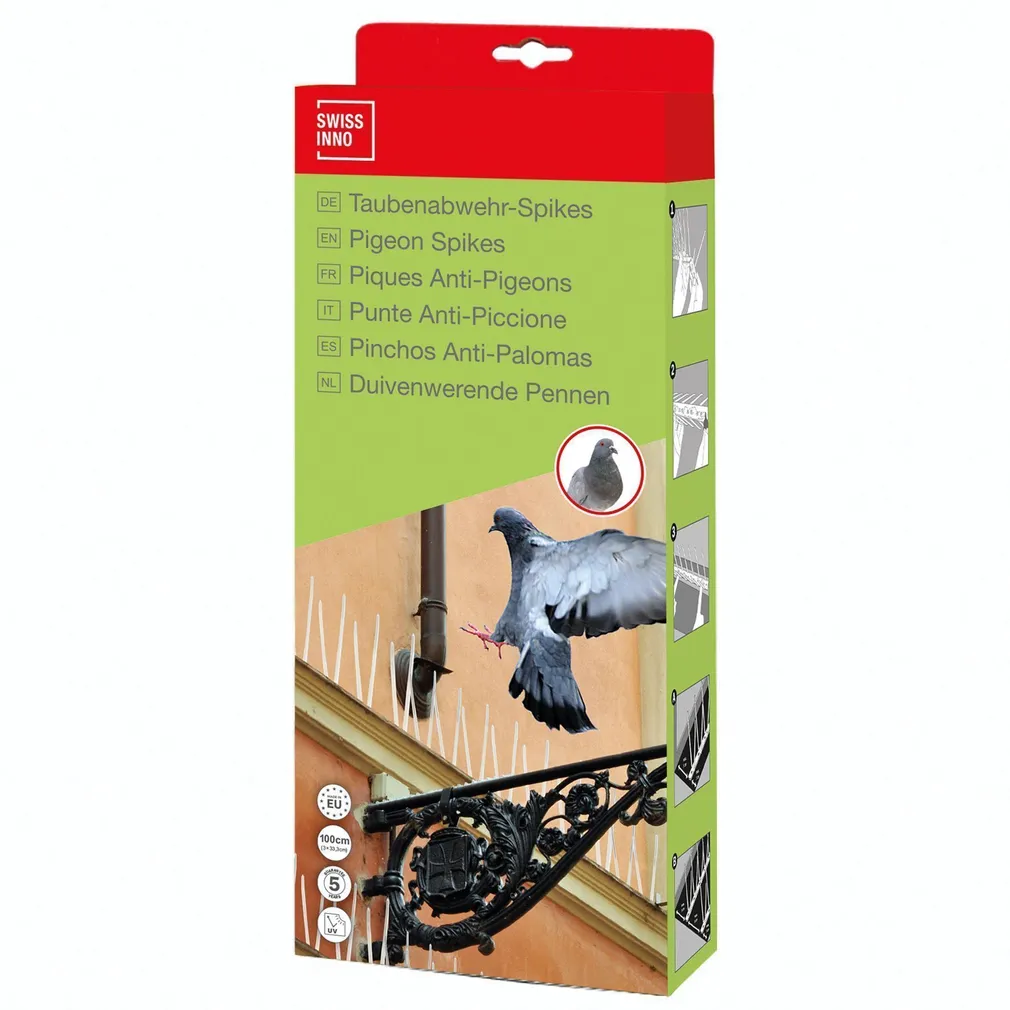
SWISSINNO BIRD FEEDERS, 100 CM, 3 SECTIONS X 33.3 CM, UV- AND WEATHER-RESISTANT
SKU: 758558
31.99 € /pack
22.39 €
The special prices of the online store may differ from the prices of the regular store
Discount 9.60 € (30%)
E-shop campaign price for a logged-in customer
• Linnupiigid lindude tõrjumiseks.
• Sobib kasutamiseks kohtades, kuhu linnud maanduvad või pesasid teevad - aknalauad, rõdud, torud, valgustid, ekraanid, reklaamsildid jne.
• Pakis 100 cm (3 x 33 mm) ribad. Üks riba on mõeldud 8-10 cm laiusele alale.
• 14-päevane tagastusõigus
• Sobib kasutamiseks kohtades, kuhu linnud maanduvad või pesasid teevad - aknalauad, rõdud, torud, valgustid, ekraanid, reklaamsildid jne.
• Pakis 100 cm (3 x 33 mm) ribad. Üks riba on mõeldud 8-10 cm laiusele alale.
• 14-päevane tagastusõigus
- Courier service to home from 3,99 € from 2-3 tööpäeva
- Parcel machine from 2,39 € from 2-3 tööpäeva
- Pick up from the store from 18.11.2026
Swissinno bird spikes for deterring birds. Use bird spikes anywhere you don’t want birds to perch: balcony railings, window sills, eaves, signs, walls, beams, under and around roofs, rain gutters, pipes, towers, light fixtures, security cameras, motion sensors, billboards, etc. Package contains 100 cm (3 x 33 mm) strips. One strip is designed for an area 8–10 cm wide. Easy to install, suitable for use on various surfaces, maintenance-free. Made of UV-resistant plastic. Includes silicone adhesive.
Installation Instructions: Carefully clean the surface where you will place the spikes. Apply adhesive to the spike and position it in the desired location. Suitable for all surfaces: building materials, wood, metal, plastic, brick, stone, etc. All surfaces where the spikes are to be installed must be clean and dry. Free of bird droppings, dirt, dust, etc.
1. Planning: Install the spikes lengthwise as shown below. You can break the strips into smaller pieces at the designated break lines.
2. Applying the adhesive: Squeeze the adhesive from the tube onto the strip to a thickness of about 1 cm. Make sure the strip is thoroughly covered.
3. Securing the strip in place: Place the strip where you want it to go. Press the strip firmly against the surface. The adhesive should ooze out from the gaps and form “beads.”
Installation Guidelines: Use bird spikes anywhere you do not want birds to perch: balcony railings, window sills, cornices, signs, beams, eaves, rain gutters, light fixtures, security cameras, motion sensors, billboards, etc
. A. Installing
a Single Row Use a single row of strips on walls and beams, spaced either 8 cm or 10 cm apart.
The strip is 2 cm wide. The gap between the strip and the wall or beam must not exceed 3 cm or 5 cm. Make sure that birds have no place to land.
B. Installing
2 rows Use 2 or more rows of spikes on wider surfaces. For example, on an area 8 or 10 cm wide. If you install two parallel strips, ensure that the distance between them is no greater than 18–20 cm.
What kind of damage do pigeons cause?
Their droppings are the culprit.
The acidity of the droppings erodes stone wall structures.
Droppings and feathers clog water pipes, causing water damage.
The flapping of wings causes noise.
The odor resulting from the decomposition of droppings is unpleasant.
Pigeons can spread diseases (including salmonella and tuberculosis) and parasites (fleas, ticks, mites, bedbugs, etc.).
| General | |
|---|---|
| Brand | Swissinno |
| Product code | 758558 |
| Package dimensions | |
|---|---|
| Product weight, kg | 0.26 |
| Package height, cm | 36.5 |
| Package depth, cm | 6.5 |
| Package width, cm | 15.5 |
| Weight, kg | 0.26 |
| Product information | |
|---|---|
| Manufacturing country | Switzerland |
Bauhof Transport
Courier service to home from 3,99 € from 2-3 tööpäeva
Delivery by courier. A Bauhof courier will deliver the goods to the doorstep at the destination. Carriage of the goods to the door or to the apartment is not included. Once the ordered products have been delivered to the courier company, the courier company will contact you in advance to specify the delivery time.
Check out more detailed terms here Parcel machine
Parcel machine from 2,39 € from 2-3 tööpäeva
Delivery to a parcel terminal. Parcels can be delivered to a parcel machine if they have a maximum size of 60x36x60 cm including packaging and weigh up to 35 kg. The delivery time is indicated on the product card. Once the products ordered have been delivered to the courier company, an SMS will be sent to the telephone number entered, containing information on the arrival of the parcel, the location and opening hours of the dispenser and a personal door code.
Check out more detailed terms here I'll follow myself
Pick up from the store from 18.11.2026
I'll come to the Bauhof store myself to order. Estimated time of delivery from the store is indicated on the product card. We will send you a notification when the goods arrive at the store.
Check out more detailed terms here