




- Delivery is not possible
TYCROC SMARTONE THERMOSTAT
SKU: 767406
We apologize, but we inform you that the desired product is currently temporarily out of stock due to high demand. However, we offer excellent alternatives from the same product category , which can bring you just as much joy!
But your shopping pleasure doesn't have to end here - you can continue your research by returning to the homepage or use our powerful search function to discover even more great options. Happy shopping!
• Nutikas eestikeelne termostaat Tycroc SmartOne.
• Otimeeritud kütmiseks ja jahutamiseks. Integreeritud õhutöötlusega.
• 14-päevane tagastusõigus.
- Delivery is not possible
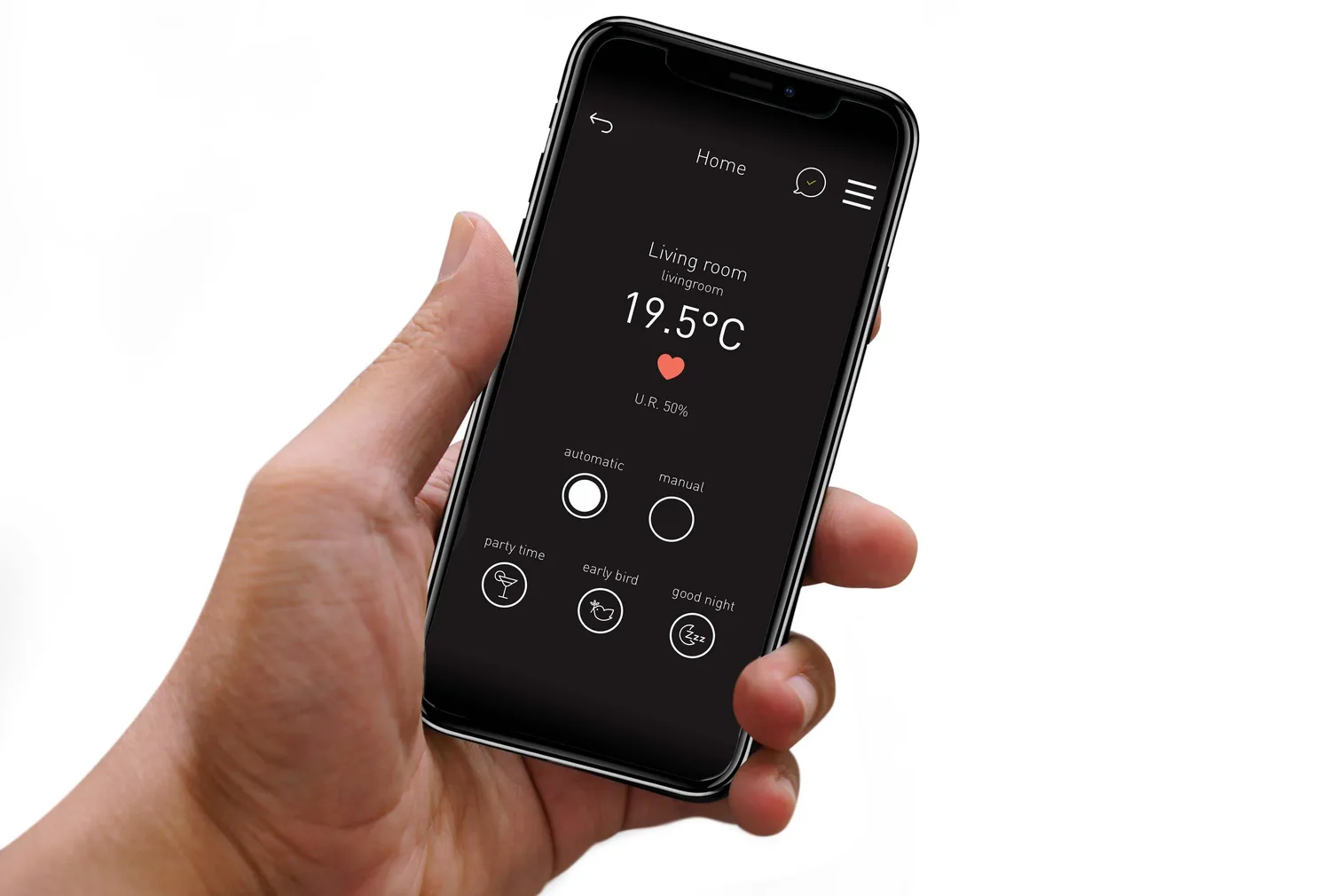
It knows when you’re away. When you leave home, it turns itself off. That way, you won’t heat or cool an empty home. As you approach home again, the system returns to your desired settings. It learns about your home. How long does it take to heat or cool your home? At what level is the ventilation running? Tycroc SmartOne helps your home systems operate more efficiently. Control it from anywhere. With the Smart365 app, your thermostat is right in your phone. Adjust the temperature from anywhere. The web portal allows you to manage your user account, view graphs and data, download manuals and user guides, access support, access after-sales services, contact us, and send messages. The web portal can also be used by specialized staff (service center) who have access to technical data to provide assistance and resolve any issues that may arise. Geolocation allows for settings such as “when I leave” and “when I return.” The user’s location is not tracked. Indoor air quality monitoring. Large 4-inch touchscreen with multitouch technology. Two analog inputs and two digital outputs for controlling either a single heating/cooling zone or, optionally, two heating zones. Temperature, humidity, and air quality sensors; floor or condensation sensors available as an option. With the Tycroc SmartOne system, each room is connected into a single virtual system to optimize energy consumption and maximize comfort. The Tycroc SmartOne thermostat features a VOC (volatile organic compounds) sensor that measures air quality. To view the room’s air quality index, simply swipe right on the main screen. The screen displays one of the air quality statuses (very poor, poor, fair, satisfactory, good, and excellent), along with advice below it recommending possible measures to improve air quality. The overall goal is to maintain excellent indoor air quality in your living environment. From very poor to excellent air quality, the system provides you with advice to help you improve your well-being. Conventional thermostats operate by setting the ambient temperature exactly as entered by the user. Since different systems have different levels of thermal inertia, this can result in a loss of comfort and energy efficiency. The Tycroc Smart One comfort system continuously monitors the conditions in each room, adjusting the actual timing of when the system turns on and off to achieve a balance between indoor comfort and energy efficiency. Traditional on/off thermostats do not respond to every small change in room temperature. However, since the temperature in a room is never completely stable, a traditional thermostat constantly tries to adjust it, which results in energy loss. The EN 15316-2 standard demonstrates the impact of temperature fluctuations on energy loss and specifies that PID and PI control strategies result in greater efficiency for the entire system. A PID controller, or proportional-integral-derivative controller (PID controller) is one of the most common feedback control schemes in artificial control systems, in which proportional, integral, and derivative controllers are connected in parallel. Depending on your indoor environment type, you can select the most suitable operating mode, prioritizing energy efficiency or maximizing comfort from the system.
| General | |
|---|---|
| Brand | Tycroc |
| Product code | 767406 |
| Package dimensions | |
|---|---|
| Product weight, kg | 0.23 |
| Package height, cm | 70 |
| Package depth, cm | 23 |
| Package width, cm | 16 |
| Weight, kg | 0.33 |
Delivery is not possible