

- Pick up from the store from 07.11.2026
- Home delivery from 16,90 € from 2-3 tööpäeva
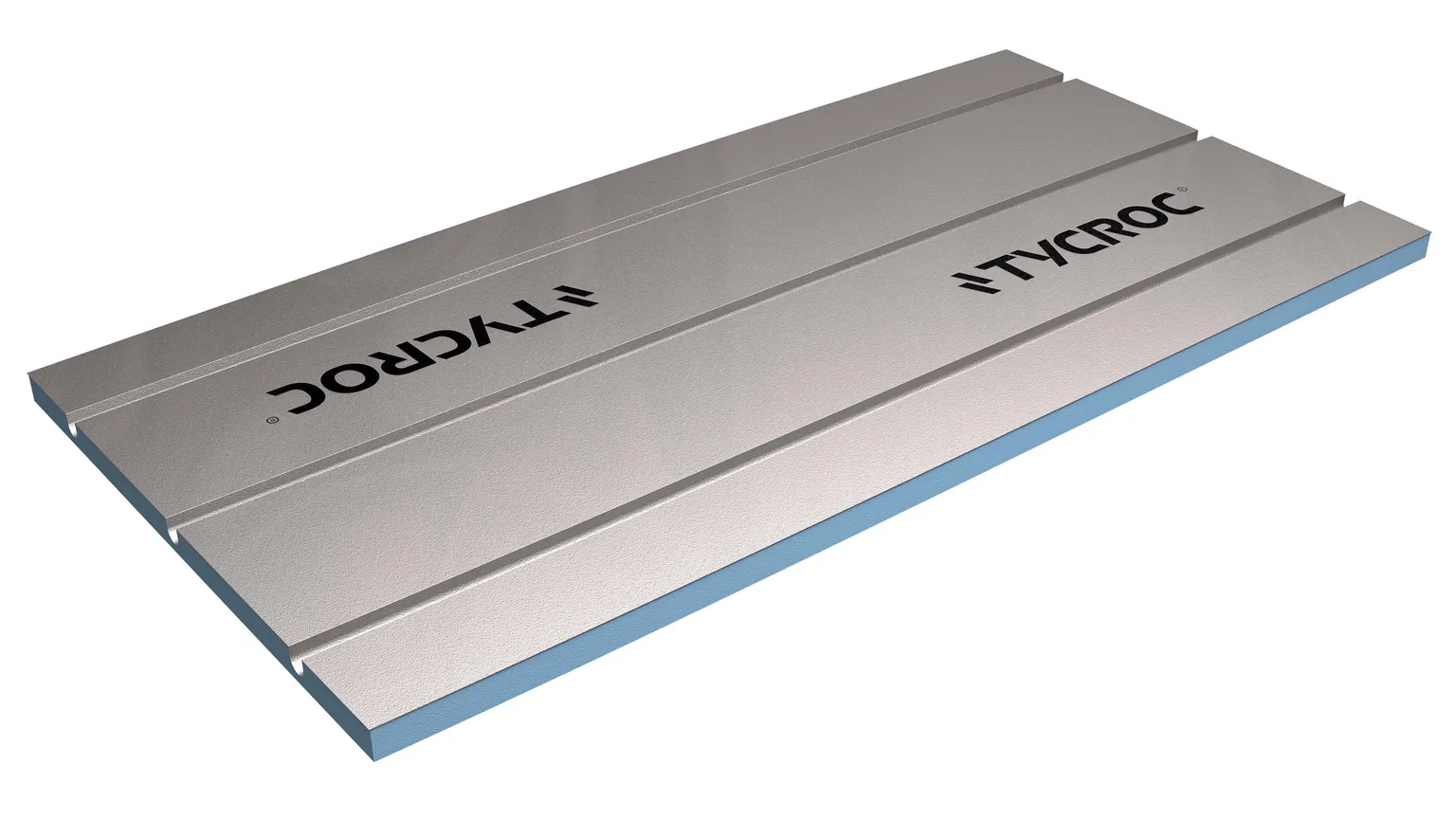
TYCROC UHP20A UNDERFLOOR HEATING BASE PLATE FOR 18-20 MM PIPES, 30X600X1200 MM
SKU: 779309
26.52 € /pcs
18.56 €
The special prices of the online store may differ from the prices of the regular store
Discount 7.96 € (30%)
E-shop campaign price for a logged-in customer
• UHP A-panel with straight grooves, dimensions 1200 x 600 x 30 mm.
• UHP base panels are designed for the quick and efficient dry installation of both water-based and electric floor heating systems, without the need for concrete pouring.
• This solution is well-suited for both renovation projects and new construction, where low installation height, minimal additional load on the structure, and rapid response to temperature regulation are important.
• Compressive strength 450 kPa, aluminum foil 0.2 mm / 200 µm.
• 14-day return policy.
- Pick up from the store from 07.11.2026
- Home delivery from 16,90 € from 2-3 tööpäeva
NEW-GENERATION UHP SYSTEM
The new system consists of separate plates with straight grooves and reverse grooves, as well as groove-free plates for the area in front of the manifold. This makes installation significantly faster and easier throughout the entire system.
In addition to improving the installation logic, the technical properties have also been enhanced. The compressive strength of the UHP base plates is 450 kPa, which ensures better load-bearing capacity compared to similar solutions. The top surface of the panels is covered with 0.2 mm aluminum foil, which helps achieve effective heat distribution even at lower operating temperatures.
PRODUCT
DESCRIPTION Tycroc UHP base plates are designed for the quick and efficient dry installation of both water-based and electric floor heating systems, without the need for concrete pouring. This solution is well-suited for both renovation projects and new construction, where a low installation height, minimal additional load on the structure, and rapid response to temperature adjustments are essential.
The base panels are made of extruded polystyrene (XPS) with grooves cut into them for installing floor heating pipes or cables. The top surface of the panels is covered with aluminum foil, which helps distribute heat more evenly and improves the system’s heat transfer. At the same time, the base panels reduce heat loss downward and efficiently direct heat into the room.
Thanks to their light weight and dry installation method, Tycroc UHP base plates are particularly well-suited for wooden structures, but they can also be used on other common load-bearing subfloors. The system helps reduce on-site construction time and creates a stable base for various floor coverings.
APPLICATIONS
Tycroc UHP underlayment panels are suitable for use in both renovation projects and new construction. The subfloor panels can be installed on various load-bearing substrates that are level, dry, strong, rigid, and stable, such as concrete, OSB, plywood, or wooden planks.
On wooden substrates, the underlayment panels can also be secured with Tycroc combo screws and fastening washers when installing a floating floor covering. In other cases, the underlayment panels are glued using Tycroc Fast Fix acrylic adhesive or a tile adhesive suitable for the specific subfloor. Underlayment installed with adhesive provides a stiffer and more stable subfloor and helps reduce footfall noise.
Tycroc UHP underlayment panels are suitable for use under all common types of flooring, including hardwood, wood, ceramic tile, and natural stone. If necessary, a leveling compound or a rigid underlayment—such as cement fiberboard, floor plaster, OSB, or plywood—may be used.
Vinyl flooring (LVT, LVP, SPC) and PVC typically require an additional stiffening layer. Floating-style laminate flooring or solid wood flooring is generally installed directly on top of Tycroc UHP underlayment panels using a suitable flooring underlayment. Ceramic floor tiles and natural stone are bonded using an appropriate tile adhesive.
The installation requirements for the underlayment panels and the subsequent floor covering remain the same regardless of whether the system uses heating pipes or a heating cable.
It is worth noting that, in addition to solutions for the area in front of the manifold, C-plates without grooves are also suitable for use in the following cases:
in rooms with complex shapes where grooves must be cut according to the specific design requirements (e.g., corners, transitions between rooms, etc.);
under electric heating mats, where they serve simultaneously as an insulating, heat-distributing, and heat-reflective substrate.
Detailed Tycroc UHP installation instructions can be found at www.tycroc.com
| General | |
|---|---|
| Brand | Tycroc |
| Product code | 779309 |
| Package dimensions | |
|---|---|
| Product weight, kg | 1.19 |
| Package height, cm | 3 |
| Package depth, cm | 120 |
| Package width, cm | 60 |
| Weight, kg | 1.2 |
I'll follow myself
Pick up from the store from 07.11.2026
I'll come to the Bauhof store myself to order. Estimated time of delivery from the store is indicated on the product card. We will send you a notification when the goods arrive at the store.
Check out more detailed terms here Bauhof special transport
Home delivery from 16,90 € from 2-3 tööpäeva
Special transport is a convenient way to order large-scale materials. By entering the postal code in the shopping cart, we will find the exact cost of transport to your door. Charges for both goods and transport service at the same time. The exact delivery time of the goods is agreed in person by the Bauhof customer service.
Check out more detailed terms here