

- Courier service to home from 4,49 € from 12.11.2026
- Parcel machine from 2,39 € from 12.11.2026
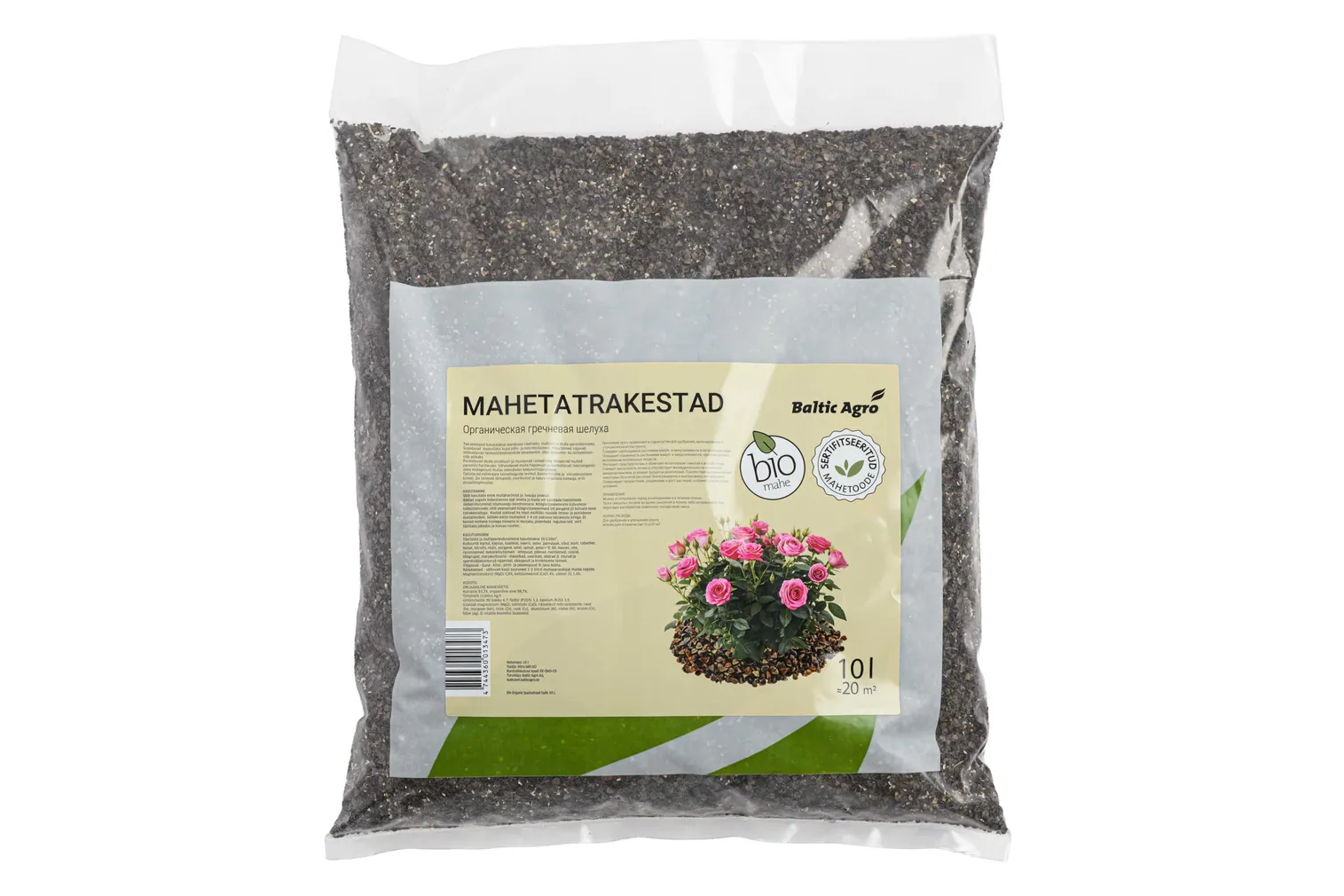
BALTIC AGRO ORGANIC FERTILIZER 10 L
SKU: 788344
14.26 € /pcs
9.98 €
The special prices of the online store may differ from the prices of the regular store
Discount 4.28 € (30%)
E-shop campaign price for a logged-in customer
• 14-day return policy.
• PRODUCT AVAILABLE FOR ORDER FROM THE SUPPLIER'S WAREHOUSE
• PRODUCT AVAILABLE FOR ORDER FROM THE SUPPLIER'S WAREHOUSE
- Courier service to home from 4,49 € from 12.11.2026
- Parcel machine from 2,39 € from 12.11.2026
Tatra husks are used in gardening as fertilizer, mulch, and for soil improvement. They contain the macronutrients and micronutrients that plants need in their natural form. They facilitate the uptake of plant nutrients while also serving as a source of those nutrients. They improve soil structure and make heavy, clayey soils easier to work. They reduce soil acidity and promote the activity of microorganisms in the soil, thereby accelerating decomposition processes. They inhibit the spread of certain plant diseases (bactericidal and antiviral effects). They stimulate plant germination, rooting, and growth, especially under stressful conditions. Can be used before tilling and throughout the growing season. Mix the husks into the soil while tilling and water, or use them as a component of potting mix when repotting houseplants. To facilitate the sowing of vegetable seeds, finer vegetable seeds (e.g., carrots, etc.) can be sown together with buckwheat hulls. The hulls also work well as mulch around roses and in pots for outdoor plants. To do this, cover the soil surface with a 3–4 cm layer of buckwheat hulls. To prevent the hulls from blowing away with the first breeze, sprinkle water regularly. In addition, organic buckwheat hulls are suitable for filling pillows, heating pads, mattresses, and similar items. As a fertilizer and soil conditioner, use 5 L per 10 m². Crops: potatoes, cabbage, turnips, radishes, celery, leeks, onions, cucumbers, rhubarb, tomatoes, squash, radishes, carrots, lettuce, spinach, parsley, dill, peas, beans, medicinal plants, ornamental plants, deciduous trees, shrubs, climbing plants, roses, flower beds, berry crops (strawberries, raspberries, currants, etc.), for establishing lawns and sports field turf, conifers, and rock garden plants. Fruit trees—apple, cherry, pear, and plum trees—5 liters per tree. Balcony plants—mix 1–2 liters of soil conditioner into the soil, depending on the size of the container.
| General | |
|---|---|
| Brand | Baltic Agro |
| Product code | 788344 |
| Package dimensions | |
|---|---|
| Product weight, kg | 1.46 |
| Package height, cm | 38 |
| Package depth, cm | 6 |
| Package width, cm | 40 |
| Weight, kg | 1.47 |
Bauhof Transport
Courier service to home from 4,49 € from 12.11.2026
Delivery by courier. A Bauhof courier will deliver the goods to the doorstep at the destination. Carriage of the goods to the door or to the apartment is not included. Once the ordered products have been delivered to the courier company, the courier company will contact you in advance to specify the delivery time.
Check out more detailed terms here Parcel machine
Parcel machine from 2,39 € from 12.11.2026
Delivery to a parcel terminal. Parcels can be delivered to a parcel machine if they have a maximum size of 60x36x60 cm including packaging and weigh up to 35 kg. The delivery time is indicated on the product card. Once the products ordered have been delivered to the courier company, an SMS will be sent to the telephone number entered, containing information on the arrival of the parcel, the location and opening hours of the dispenser and a personal door code.
Check out more detailed terms here